
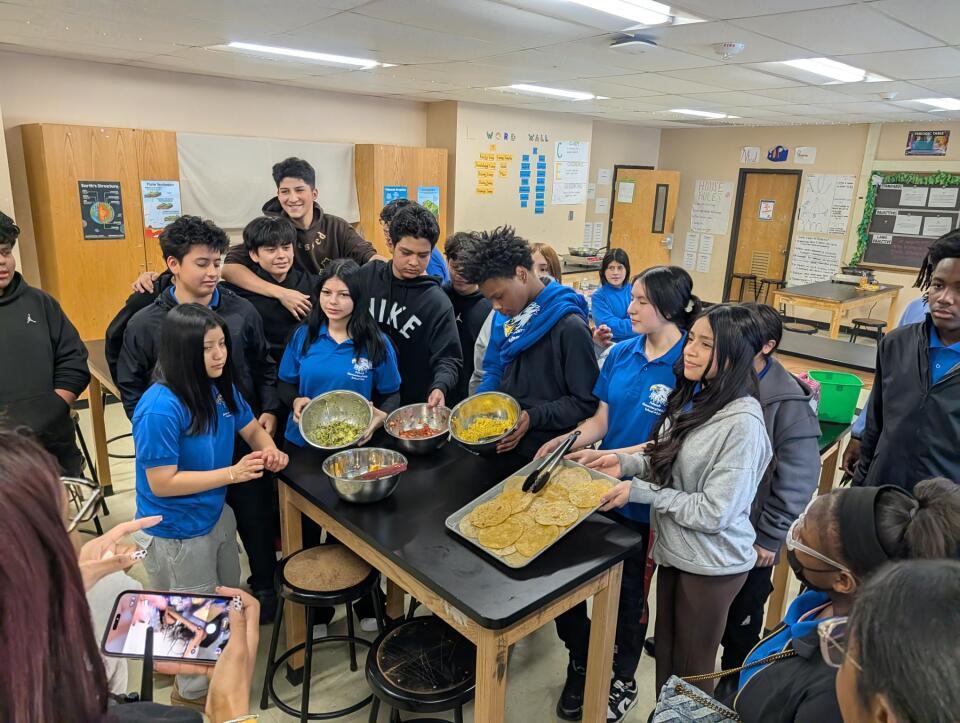
“I was able to do something I love—cooking for other people,” one student said after a recent Farm to Classroom program at Fallstaff Elementary/Middle School, where Great Kids Farm staff taught students how to make breakfast tacos using fresh farm ingredients.
Another student added, “I enjoyed working together with my friends to make the tacos.”
Great Kids Farm has been part of the Baltimore City Public Schools story since the 1950s, with a history of education that dates back to 1912. For most of the school year, its 33 acres of fields and forest in Catonsville are used for daily educational field trips and events like the African American Foodways Summit and School Garden Summit. After the pandemic, the farm team – part of the Food and Nutrition Services department – pivoted to offer additional programming that could be delivered virtually or brought directly into classrooms, while health concerns limited field trips.
The result? Farm to Classroom programs, free in-person lessons led by farm staff, that cover topics like plants, nutrition, food waste, and farm-fresh cooking. Teachers request the programs, and Farm to School staff tailor them to align with curriculum -- such as a lesson on Native American fry bread during a relevant social studies unit.
The offerings proved so successful that the Food and Nutrition Services team continued them even after field trips resumed. Seventy-six percent of respondents to program surveys this year said that students were more engaged in Farm to Classroom lessons than in a traditional classroom lesson. This school year alone, they have reached 5,422 students, with many more expected to participate before the end of the year.
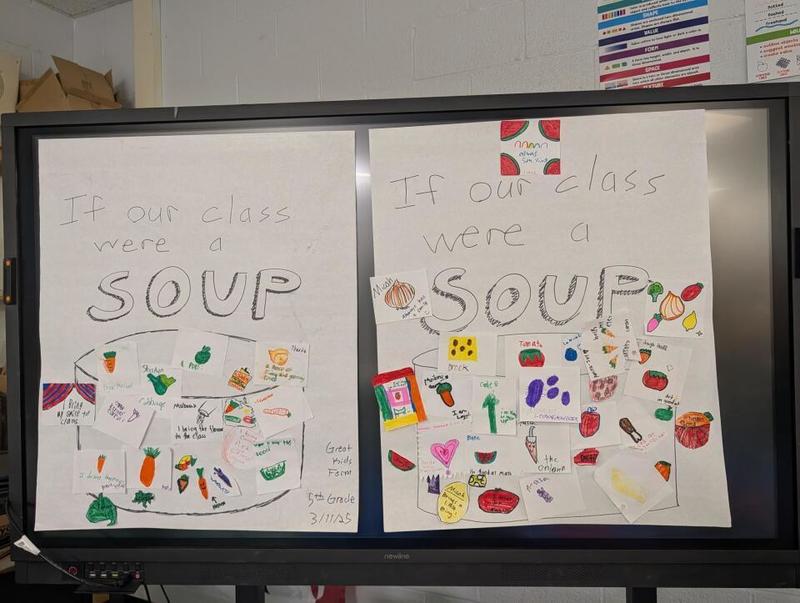
“We hope that whether they're harvesting peppers during a farm field trip or making farm-fresh salsa at their school, all students will have a transformative experience with our programs,” said Anne Rosenthal, Farm to School Specialist. “We want to empower them to understand and engage with their food system, and to make healthy choices in our cafeterias and beyond.”
At William Paca Elementary School, a recent Farm to Classroom “farm to smoothie” experience left a strong impression on both students and staff. Quiera “Ms. Q” Brannon, Farm to School Program Assistant, introduced students to new foods including figs from Great Kids Farm, while guiding them through hands-on learning about plant- and animal-based ingredients. Students eagerly participated in sorting activities, carefully used safety knives to prepare fruit, and worked together to mix their smoothies—complete with a “mixing dance” that brought movement into the lesson. Pre-K Teacher Laurel Enoch highlighted that students explored foods they might not typically choose and learned how to create a nutritious snack they can make at home.
But these programs aren’t just about lessons about eating well. Teachers noted that Ms. Q encouraged student voice by asking for their feedback, making the experience both engaging and inclusive.
As another pre-K teacher Darlene Lambert shared, it was “a wonderful, wonderful experience.” Other teachers note that lessons help students work on skills such as teamwork and collaboration.
Vonyeh Clanton, a teacher at Fallstaff, agreed: “I personally loved this experience because it’s not a typical activity for students. I enjoyed seeing them practice competency skills such as 'responsible decision-making,' 'self-management,' and 'self-awareness.'”
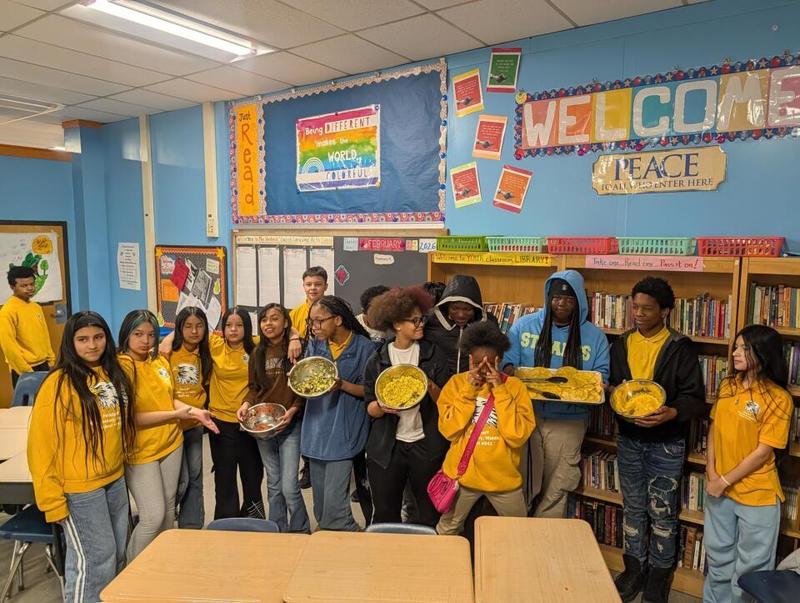
As National Nutrition Month highlights the importance of building healthy habits, Farm to School programs like Farm to Classroom experiences show how meaningful learning can be when it is hands-on, engaging, and rooted in real-world experiences. By connecting students to fresh foods and practical skills, City Schools continues to prepare young people to make informed choices that support their health now and into the future.