
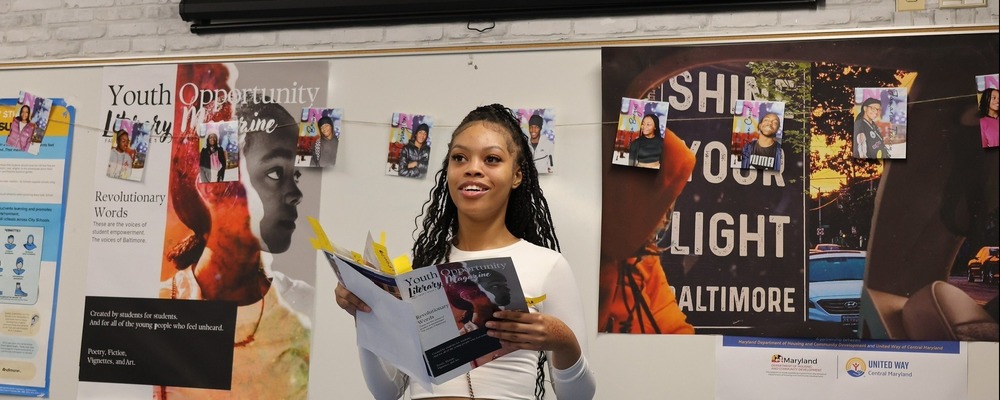
Twelfth grader Brian describes his family—and his inspiration—as fire.
“My family is fire—...
They are flames - always heated
always running around places
that are easily destroyed
Making it hot
no matter WHAT the weather says
… enlightening me to how it all works.
As they get older, burn out,
their fire is more like a candle
they turn to ashes and blow out
leaving me behind,
the last match in the box.”
Brian’s classmate Wil’Nayah also uses fire as a metaphor when describing her mother:
“She is the spice in a world that settles for bland,
the heat that DARES you to keep going. There is
something addictive in her chaos, a thrill in her stubborn fire.
There is that burn. She can scorch without
meaning to, leave your tongue raw with
her honesty, your heart raw from her heart.
Still when she’s gone, everything tastes duller.
You will find yourself searching for that same
spark again and again.”
Brian and Wil’Nayah are two students in Dr. Andrea Ferraro’s Creative Writing Class at Youth Opportunity. Their poems are featured in the school's first literary magazine, Revolutionary Words, “created by students for students. And for all the young people who feel unheard.”
Youth Opportunity is a nontraditional pathway for high school students throughout Baltimore City who benefit from a more individualized education setting. The school is part of City Schools’ Re-Engagement Center, which supports young people who have been disconnected from school, as they identify and mitigate barriers to success in school and beyond.
Revolutionary Words features the reflections of 14 talented students in poems about confidence and perseverance, overcoming loss, and finding meaning in their lives and world. Some poems are literal, like Corey’s description of his favorite Baltimore foods and festivals, while others are more metaphorical; Navaeh describes the trees along her walk as “old friends who whisper, their voices creaking in the breeze” and Neveah writes “It’s not about reaching the end but about how we travel—with curiosity, with tenderness, still searching for meaning in the brief light we’re given.”
What compelled the students in Dr. Andrea Ferraro’s Creative Writing class to share their emotions so honestly and freely?
“I get relief to get my feelings out,” says Brian.
Wil’Nayah says that “poetry is having a voice and speaking your mind.”
The process of honing those voices for the magazine began when the class read Girl by Jamaica Kinkaid.
“I asked them to mirror that sort of stream of consciousness writing, including abrupt confession and fear,” says Dr. Ferraro. “I started conversations with the kids about who they are and what they like. They were more honest than I expected them to be; they talked about difficult situations and traumatic personal experiences. It could have been a moment to shut everything down, but instead, they opened up. They became comfortable with each other and learned from each other's losses how to grow.”
The Creative Writing students worked collaboratively to edit their pieces. During the process, they shared their experiences and supported each other. Even Principal Federico Adams shared some of his writing, which Dr. Ferraro says was “incredibly powerful. It helped the students understand the power of writing.”
Having that voice and power makes a difference. “When I started taking creative writing, I felt more comfortable expressing my feelings,” said Brian. “It’s more like therapy sometimes.” In his poem, Brian referred to himself as “the last match in the box” in reference to his older siblings and his mother, who have “always been on the right track” despite adversity.
“I’m the last one,” he says. “I have dreams and confidence to graduate, move out, and make my future.”
For Wil’Nayah, the process of writing her poem and working on the magazine “helped me use words I’ve never used before and speak out.”
Brian and Wil’Nayah agree that Dr. Ferraro made the process easy by providing encouragement, prompts, and questions that sparked insight. Says Dr. Ferraro, “A big project like the magazine creates a cohesive group and buy-in with kids working on one goal.”
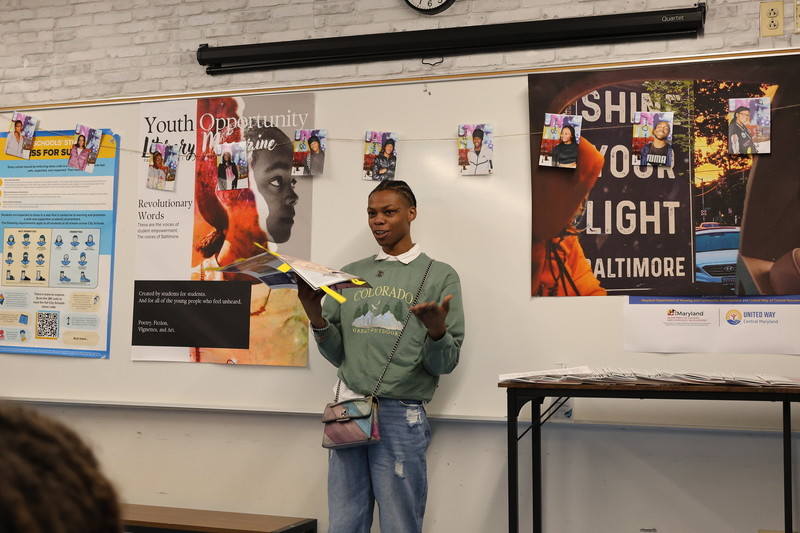
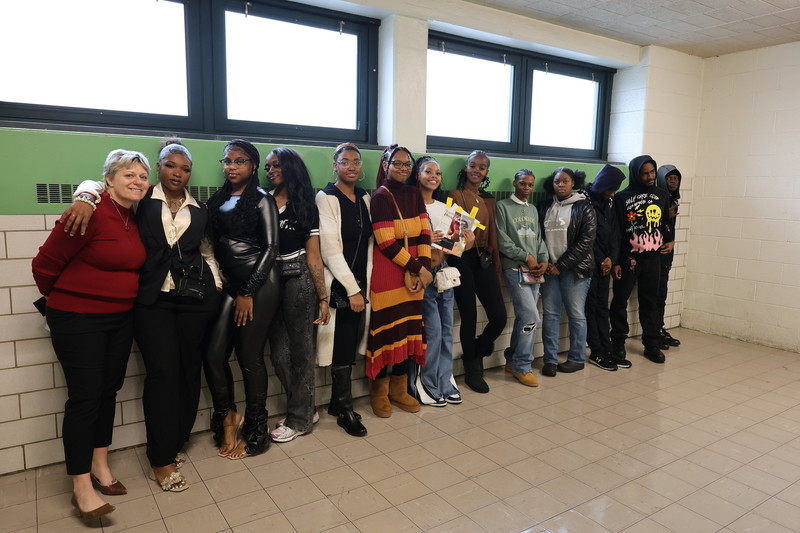
The student’s creativity, honesty, and inner voices were evident when they read their work (some from the magazine, some unpublished) to their families at a school-hosted event. Some of their writing was intimate and deeply personal, and often not discussed publicly, but the students chose to share their innermost feelings.
“It was cathartic for the writer and relatable to the other students,” says Dr. Ferraro. “That’s what we need to be doing with language.”
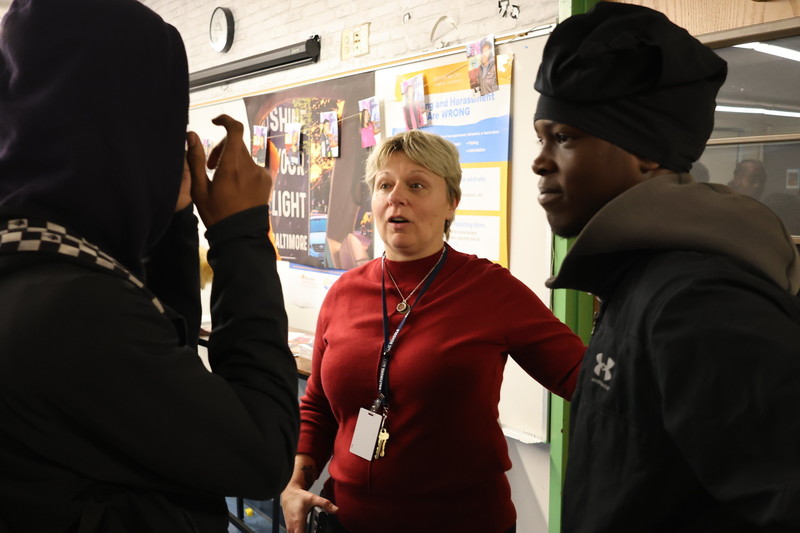
The literary magazine also helped build community beyond the school. Environmental Health Consultants, a Baltimore-based environmental consulting and testing company, financially supported the production of the magazine. For the company’s founder. Kamau McAbee, “the ability for students to use their creative voice, speak to their life experience, do something positive, and present something in a positive light is exciting.” Explore how Youth Opportunity and other Baltimore City schools support diverse learners across the district.