
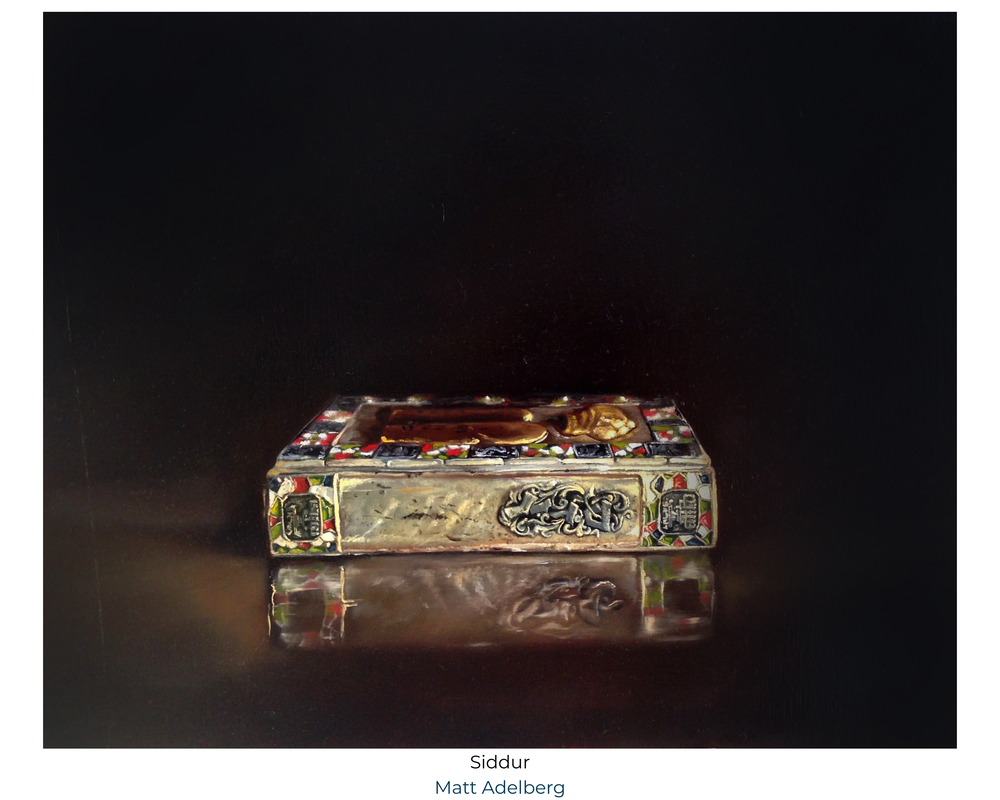
In honor of Jewish American History Month, we are profiling artist and educator Assistant Principal Matthew Adelberg at Baltimore Polytechnic Institute (Poly). Adelberg’s journey highlights the importance of education, art, religion, culture, and community.
What first inspired you to become both an artist and an educator?
The two were never separate for me. They grew from the same root experiences. I grew up spending time in two very different homes. One was plagued by abuse and violence. The other was wholesome, a place where morality, empathy, and kindness were stressed. Having both gave me, from a very early age, an unusually clear sense of what was right and wrong. When I was fourteen, dealing with the death of my grandfather, who had provided the safe space for me as a father figure, and the arrest of my biological father, I leaned more into my religion and culture as well as art as an escape and guide forward.
Art became the voice I needed when I felt voiceless. I knew firsthand what it meant to need a voice, and I became a teacher because I wanted to create the conditions for my students to find a voice in and through art. I approach teaching art as a language first, rather than a skill to teach and I think this came directly from understanding just how essential it is for each of our students to have that voice, power, and agency.
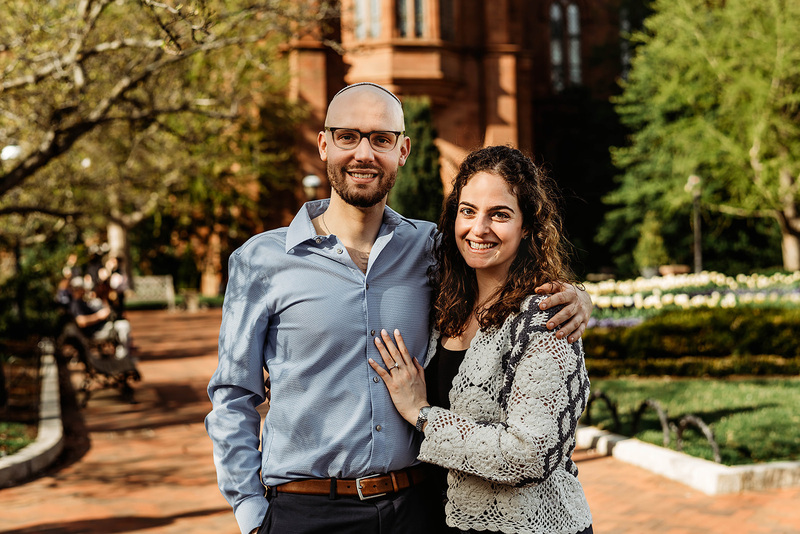
What is your role at Poly, and what was your career journey from graduating high school to here?
My journey into the arts really began early on. When I was younger, I got into some trouble for doing graffiti. My grandfather, at the time, was understandably pretty upset by this and kept encouraging me to paint on canvas and not be destructive. After he passed away I began painting. I bounced around high schools and then transferred to Carver Center for Arts and Technology (GW Carver). That transfer changed everything. After GW Carver, I studied painting in Colorado and then abroad in Italy. I went on to earn a Bachelor of Fine Arts in Painting and Art History, followed by a Master of Arts in Teaching.
In the summer of 2014, I apprenticed under the renowned figure painter Odd Nerdrum in Norway- an experience that pushed my craft in profound ways. My work has been recognized with awards including the prestigious international Elizabeth Greenshields Grant, I was named a Master of American Realism twice and have shown my work in New York, Florida, Colorado, Massachusetts, Israel, Italy, and Norway.
I joined Poly as an art teacher, building an art program centered around student voice, lived experience, and transformative practice. I spent numerous years as the visual arts teacher and fine arts department chair.
I'm now one of the Assistant Principals at Poly. One of my main responsibilities, and one of the great privileges of my role, is supervising our mental health supports, student wellness, counseling services, and our IEP and 504 programs. I also have the honor of supervising our Fine Arts, ELA, Counseling, Social Workers, and World Language Departments. Every day, that work puts me at the intersection of student voice and student need, which is exactly where I want to be.
Can you tell us about your paintings?
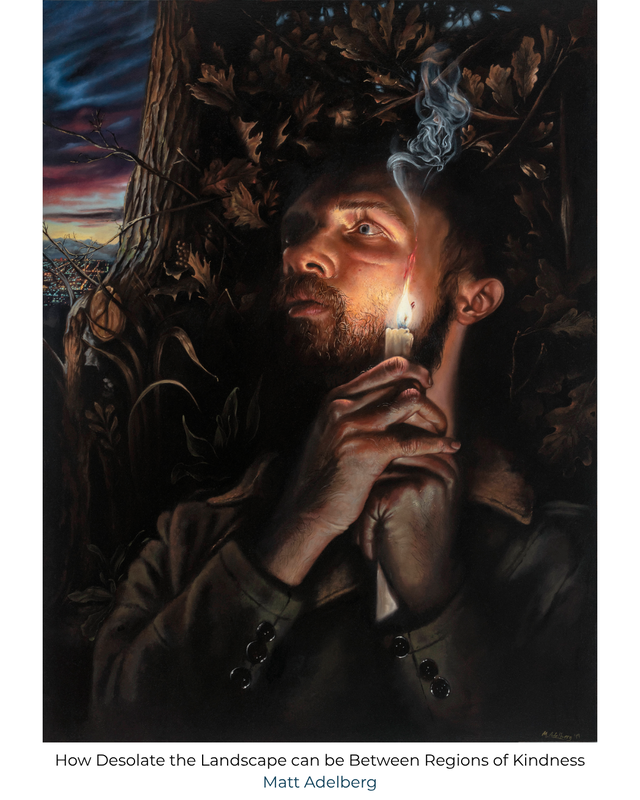
I am a realist figure painter. I'm really interested in the craft and historic processes of painting. I begin every painting by covering the canvas in dark paint and slowly pulling the light out from the darkness. That process is based on historical baroque processes of painting and is imbued with meaning. By starting in total darkness and then working to wrestle out the light,it forces me to re-discover and evaluate the light (and all of its implications). Even in all of the darkness, the light always prevails.
My work focuses on faith, mortality, morality, and lineage - all rooted in my experiences as a child and as an adult. I paint what I know. I firmly believe that's the only honest way to paint and, really, to live.
How has your heritage shaped the way you teach?
While I grew up deeply entrenched in my Judaism as a peoplehood, ethnicity, and culture, I wasn't necessarily always as religiously observant. I found my way there through crisis and need as I navigated my biological father’s arrest and my grandfather’s death.. These events enhanced my sense of morality as well as my own agency through my artwork. Being Jewish has taught me to grapple with questions rather than always looking for an answer. I try to bring that same openness and intellectual humility to my students in both the classroom but also in how I work with them every day.
I wear a kippah every day as a statement of pride and conviction. Being visibly, steadfastly Jewish in a Baltimore City school is itself something I hope communicates a lesson to everyone around me; be proud of who you are, even when, especially when, that means being different from your peers.
What would you like people to know about Jewish Americans or your experiences?
What I want people to know about Jewish Americans is that we are deeply woven into the fabric of this country and this city. Jewish Americans are an extraordinarily diverse community. Baltimore has one of the oldest and most rooted Jewish communities in America. Jewish immigrants poured into East Baltimore in the late 19th and early 20th centuries. The Baltimore Jewish community has produced many leaders who have worked to make the world a better place, addressing issues such as civil rights, women's suffrage, labor relations, refugee resettlement, and the elimination of poverty.
I want people to understand that Jewish identity is alive, meaningful, and proud. It is earned and lived. And in this moment in time, it matters more than ever to be visible and unashamed, to say clearly: this is who I am, these are the values I carry, these are my people, and we are a part of the Baltimore community.
Do you see connections between Jewish traditions of learning and your approach to education?
Deeply. Jewish learning is fundamentally dialogical- you can’t really meaningfully study or learn in isolation but in conversation, wrestling with text and tradition and one another. Jewish tradition is centered around mutual inquiry and grappling with questions. You do not study alone; you study in “chevruta”, in partnership. That maps directly onto what I believe about education: that learning is mutually created, that it comes out of questioning and conversation, that no one holds all of the answers.
I think the Jewish tradition's focus on community is one that has very much influenced how I approach education. Judaism requires community. We are not even able to say the most important prayers of our texts without being in a “minyan,” with at least ten Jewish adults present. Why? Because some things are too important, too significant, to be carried alone.
I think about that every time I walk into a school. The most important things we come to understand about ourselves and the world, we understand together, through the friction, courage, and grace of genuine encounters with other people.
This reliance and insistence on community also teaches something about communal obligation and interdependence. You can’t show up only when it is convenient. You show up because someone else needs you there.
I want my students to feel that about their classrooms and school. That their presence is not incidental, that the community assembled in each room and building cannot fully function, cannot fully become what it is meant to be, without each of them. Every voice changes what is possible.
– Assistant Principal Matthew Adelberg