
Now that we have reached the midpoint of the school year, let's take a look at how schools are engaging families in Student Learning Plans (SLPs).
What is a Student Learning Plan?
The Student Learning Plan helps staff, students, and families deeply understand who the student is, set positive goals, and tailor support and opportunities to each student’s strengths and needs. It can guide parent-teacher conferences and other conversations throughout the school year.
Families answer questions about:
Student strengths, goals, and how to support the student in About Me
How the student learns best, student interests, and parent/caregiver hopes and dreams for the student in Family Collaborative Questions
How are some schools using Student Learning Plans outside of parent-teacher conferences?
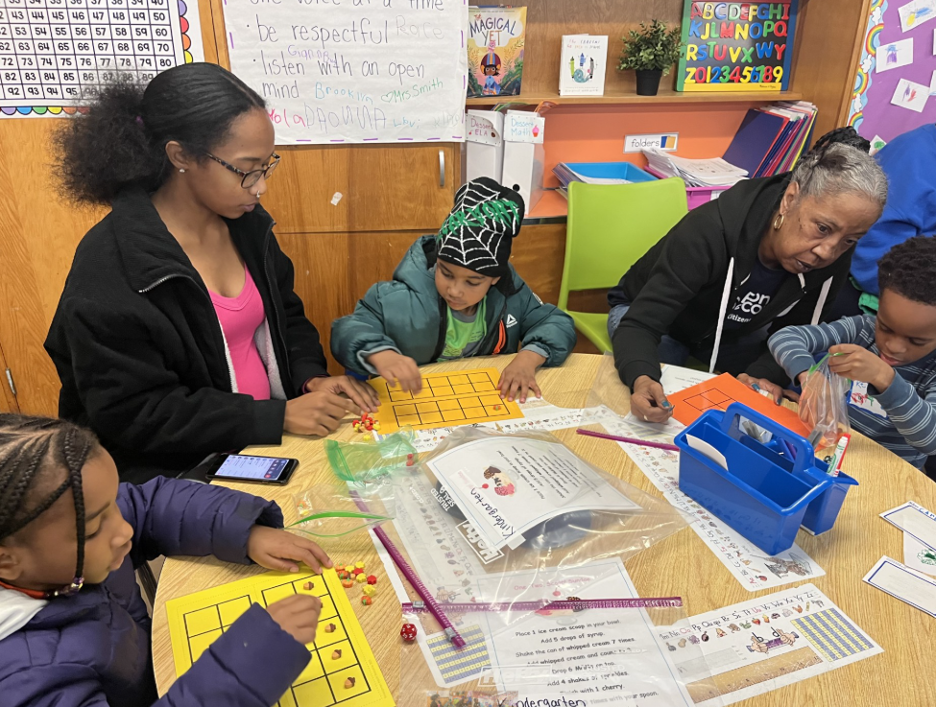
At Mary Ann Winterling Elementary School, kindergarten teacher Meaghan Smith’s literacy and math workshop was in full swing.
Ms. Smith started by explaining why learning letters is so important. She then connected letter-naming to grade-level expectations because this skill is the reading goal for many students. Students practiced naming the letters seen on everyday packaging.
“I really try to stress to families how easy it is to squeeze in a little bit of learning throughout the day,” said Ms. Smith. “And who doesn't love playing with food?”
The math portion focused on helping students learn to count up to 20 objects.
“We discussed why this goal was important for our students. I shared our class data and that most of our students are working towards this goal for their SLP.”
Ms. Smith demonstrated counting any small object, like pencil erasers, cereal, or beads. “Then, we practiced counting while making ice cream sundaes,” she said. “We counted out M&Ms and drops of syrup. The reason for this was to stress how easy it is to practice counting at home, and that it is also easy to make practicing math FUN.”
How has the Student Learning Plan helped a student?
Ms. Smith shared the following recent example. (*The student’s name has been changed to protect privacy.)
Jada started school as a very shy and apprehensive kindergartener. I remember on the first day of school, Jada clung to her family, begging them to let her stay home. I looked up at Jada’s family for reassurance, and they made it pretty clear that while they were willing to give me a chance, they were not 100% sold.
I invited Jada’s family into my classroom to complete a quick activity based off the Student Learning Plan’s About Me section. As I sat with Jada and her family and asked about their interests, their hopes and dreams for the year, and how Jada liked to learn best, I watched their walls start to go down.
From there, we worked together as partners. I met with Jada’s mother to discuss her Beginning of the Year test results. We developed a plan including what I would do in the classroom as well as ways that Jada’s family could support her at home.
We all kept up our end of the bargain. Jada’s mother and I checked in regularly from beginning of the year until now to discuss Jada’s progress and to make adjustments.
Thanks to our teamwork, I am so happy to say that Jada is achieving in both reading and math, with 81% progress towards her annual growth goal for math!