
Each March, City Schools joins the nation in recognizing Women’s History Month by celebrating the women who have influenced our communities, country, and the world. Across our schools, students study the leaders who broke barriers, examine the movements that expanded opportunity, and reflect on the women who continue to guide and strengthen Baltimore today.
 History
Women’s History Month grew out of a grassroots effort to ensure that the contributions of women were recognized in classrooms and public life. The movement began in 1978 in Sonoma County, California, where educators organized a local “Women’s History Week” to coincide with March 8, International Women’s Day. The idea gained national attention, and in 1980 President Jimmy Carter issued the first presidential proclamation declaring the week of March 8 as National Women’s History Week. In his message, he called on schools, community groups, and families to honor the achievements of women throughout American history.
Behind the effort was the National Women’s History Project, founded by educators including Molly Murphy MacGregor, Mary Ruthsdotter, Maria Cuevas, and Paula Hammett. The organization worked to provide schools with materials, lesson plans, and historical research that highlighted women whose stories had often been left out of textbooks.
As interest and participation grew across the country, Congress expanded the observance. In 1987, lawmakers passed a joint resolution designating March as Women’s History Month. Since then, every president has issued annual proclamations recognizing the month and encouraging Americans to study and celebrate the vital role of women in shaping the nation.

Learn more:
City Schools named after women who have made significant contributions to history and society
National Women’s History Museum
Smithsonian American Women’s History Museum

Books to read:
Elementary
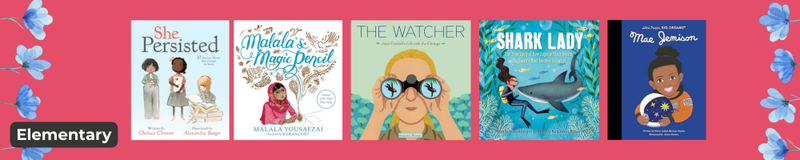
She Persisted – Chelsea Clinton (Ages 6–9)
Malala’s Magic Pencil – Malala Yousafzai (Ages 6–9)
The Watcher: Jane Goodall’s Life with the Chimps – Jeanette Winter (Ages 6–9)
Shark Lady – Jess Keating (Ages 6–10)
Mae Jemison (Little People, Big Dreams) – M. I. Sánchez Vegara (Ages 5–8)

Middle
Hidden Figures (Young Readers’ Edition) – Margot Lee Shetterly (Ages 8–12)
Girl in the Blue Coat – Monica Hesse (Ages 12–16)
101 Awesome Women Who Changed Our World — Julia Adams (Ages 8-12)

High
Code Girls – Liza Mundy (Ages 14–18)
Rad American Women A-Z — Miriam Klein Stahl (Ages 15–18)
Hidden Figures – Margot Lee Shetterly (Ages 14–18)

Did you know?
Did you know that Western High School, part of Baltimore City Public Schools since 1844, is the oldest public all-girls high school still in operation in the United States? Its long history reflects Baltimore’s early commitment to providing rigorous academic opportunities for young women at a time when most girls had limited access to education.