
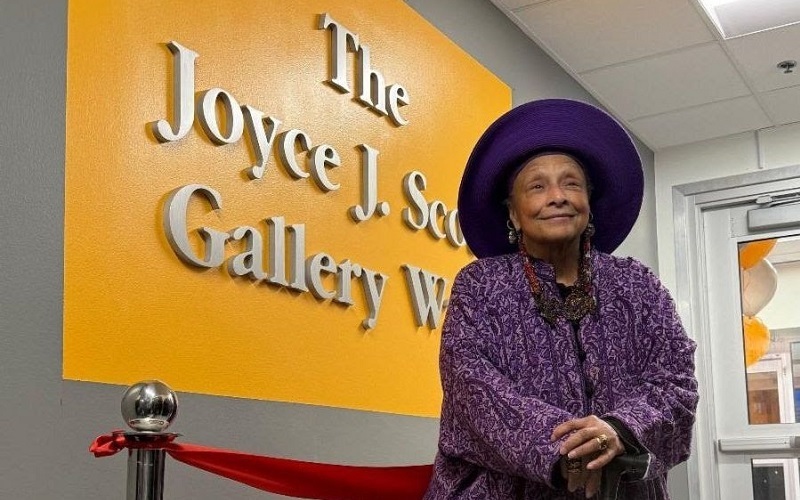
Baltimore City Public Schools proudly recognizes and uplifts Black history, excellence, and contributions during Black History Month and every day — through our curriculum, our culture, and the achievements of our students and graduates. Among them is Joyce J. Scott, a City Schools graduate whose work has significantly influenced contemporary American art.
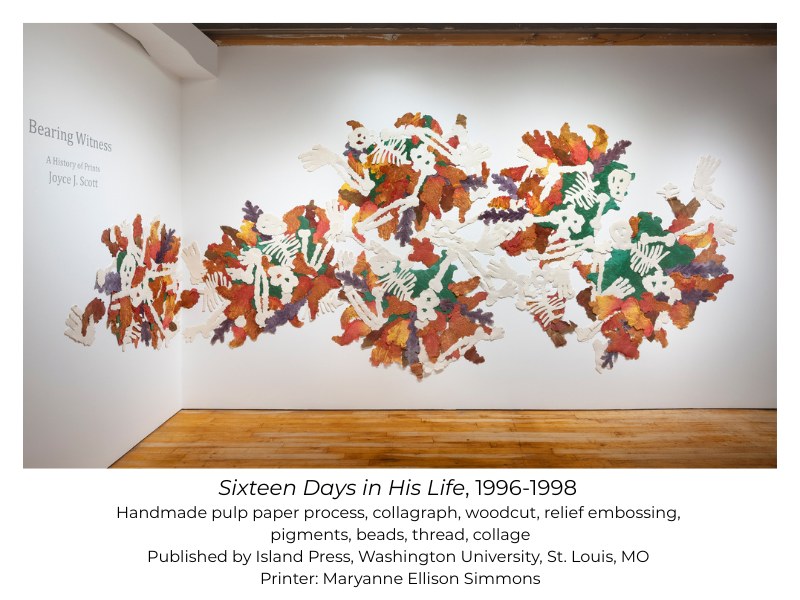
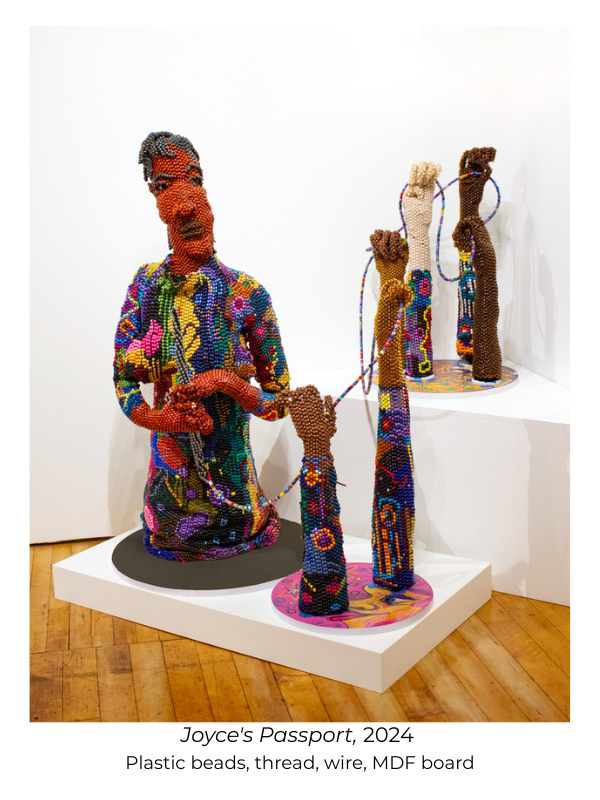 Joyce J. Scott is widely celebrated for her groundbreaking work in contemporary art, blending traditional craft techniques with powerful social commentary. Her intricate beadwork, quilts, performance and mixed-media sculptures explore themes of race, identity, and social justice, earning her international recognition. Scott has received numerous awards, including a MacArthur “Genius” Fellowship, and her work is included in major museums such as the Smithsonian and the Baltimore Museum of Art. Her art challenges viewers while honoring heritage, making her not only a remarkable artist but also a transformative force in American culture. And it all started in Baltimore and at City Schools.
Born to sharecroppers from South and North Carolina and raised on Mount Street, Scott proudly calls herself a “Sandtown girl.” Growing up in the 1950s, she described school as an important part of the life of her neighborhood. “I’m really one of those kids who was raised by the community as well as by my parents.” She attended Coppin Demonstration School (P.S. 132) and walked there each day. “There’d be the moms yelling from the windows, ‘Hey, little Joyce,’ and making sure all the kids got to school.”
 School shaped her artistic path. In elementary school and later at Lemmel Middle School, teachers set aside leftover art supplies at the end of the year and gave them to her. She returned after summer break with new pieces to share. She credits that mentorship. “All of those people saw that glimmer in me, that shine, that light in me, that meant I was ready to learn.”
“What I remember… was the dense intervention of affection and real, real knowledge that my teachers had. It wasn’t just the ABCs… It was a real hands-on evolution for the student.” From elementary through high school, the guidance of her teachers and parents shaped her direction. “My parents really understood the importance, the alchemy, the magic of education and being blessed to have a public school that was free.”
Her mother, Elizabeth Talford Scott, was a respected textile artist. Her father, Charlie Scott Jr., taught her how to take care of herself and be self-sufficient. “You need those skills to succeed as an artist,” Scott said. "Or how else would you continue being an artist?”
For high school, Scott attended Eastern High School during the era of desegregation. Eastern was the sister school to Baltimore City College, and students took classes with teachers from both schools.
She spoke highly of her art teacher, Olin Yoder. “Mr. Yoder saw that glimmer in me strong,” she said. He helped her secure summer teaching opportunities at Camp Neyati Arundel and Deep Creek Lake and supported her in earning a Senatorial Scholarship to Maryland Institute College of Art (MICA).
At one point, her father asked Yoder if he was certain about sending her to Camp Ney-A-Ti in Maryland. Yoder replied, “She’s the one.” Reflecting on that moment, Scott said, “I believe he meant if you invest in her, what you'll receive from that far exceeds what an average kind of education will give you.”
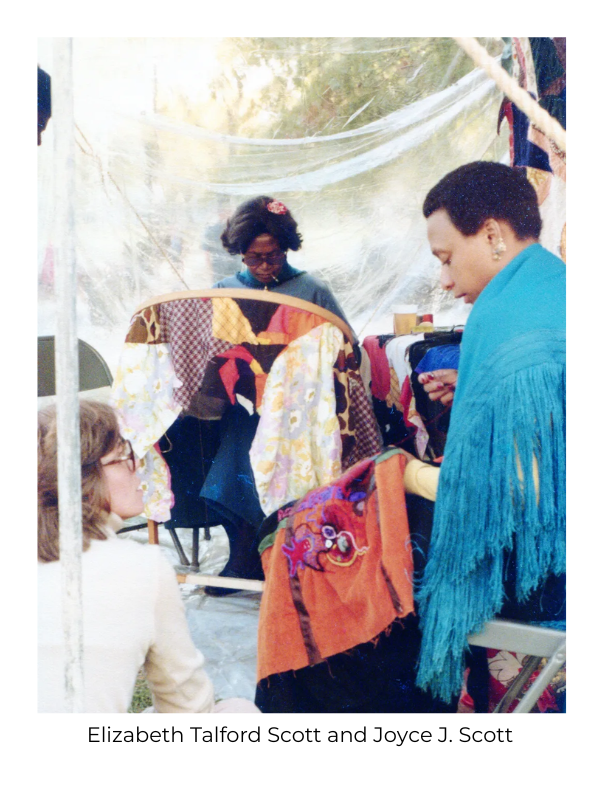 Scott attended MICA for undergraduate with a degree in teaching art. During her student teaching however, she quickly found it was not entirely for her. Instead, she traveled to Mexico and received her masters degree at Instituto Allende. As she learned native art in Mexico she was discovering that it mirrored the art she grew up with. “'I’m in Mexico, and I'm doing the things that my mom told me her family did, the way we work with yarn, the way I would string beads, the way I worked with a giant loom. Now, they didn't have the same kind of loom, but I was using the techniques that they used.”
When she returned to Baltimore, she started substitute teaching and using those teaching skills to teach and give back to the communities in Baltimore. She often taught alongside her mom at the recreation centers or in afterschool programs. “We would teach quilting a lot, and basketmaking a lot,” Scott said. “Because she was from South Carolina, she had a different way of doing things, and we worked together jointly to also show the great combination of old way, new way, mom, daughter, highly educated, someone who's highly emotive and educated in a different way.”
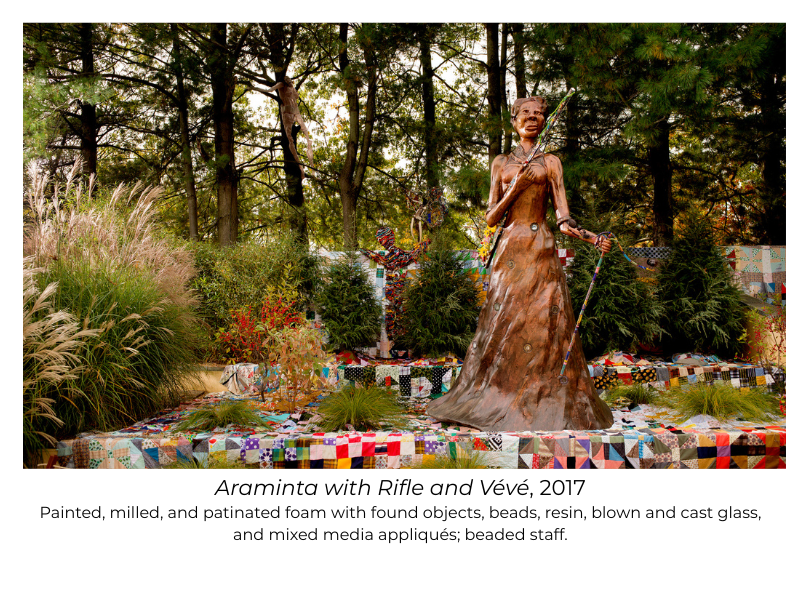 In 1991, Scott’s first major solo exhibition took place, and her first public art piece was unveiled. In 2024, the Baltimore Museum of Art held a retrospective of her 50-year career that featured nearly 140 pieces. As Culture Style once described, “in the hands of Joyce J. Scott, the possibility of glass beads are endless.” It’s no wonder many rightly call her “the Queen.”
Scott encourages students, especially young artists, to recognize their value and responsibility in shaping the world around them. “We need artists and craftsmen,” she said. “Craftsmanship is in everything. It's how you dress, it's the fabric you wear. It's the utensils you use. It's the plates you eat off of. It's the houses in which we live. It's the books we read from. And when I say the arts, I'm talking about visual, performing, literary arts, musical arts.”
Her advice is direct: “Don’t stop. Follow that dream.” At the same time, she urges students to strengthen both their intellect and their craft, noting that “there’s nothing wrong with being a really, really smart artist.” She encouraged students to “celebrate their intelligence.”
She also calls on young people to stay curious, pursue experiences beyond what feels comfortable, “I was just adventure hungry. So, I traveled the world... People live, work, love, die, differently in different parts of the world, and that also just elevated and expanded my knowledge about what life is, especially ethnically, because we tend to be with our own folks all the time. But when you start traveling the world, even if you're only traveling the United States, you understand just how broad, wide, amazing being a human is.”
At City Schools, we honor Scott’s legacy with the recently named Joyce J. Scott Gallery Walk at the Central Office building on North Ave. The gallery reflects both her influence and the importance of arts education across City Schools. Dedicated in 2026, the gallery walk honors Scott’s legacy as a nationally recognized Baltimore artist and affirms the district’s long-standing commitment to presenting student work with the same respect afforded to professional art— affirming the space as not only a gallery but a cultural landmark where creativity is preserved, exhibited, and valued.
Reflecting on being an artist, Scott said, “The great thing about also being an artist is that you are a maker. You're creating because you want to, because it's inside of you. And it is a language that not only draws others to you but enlightens them as well.”
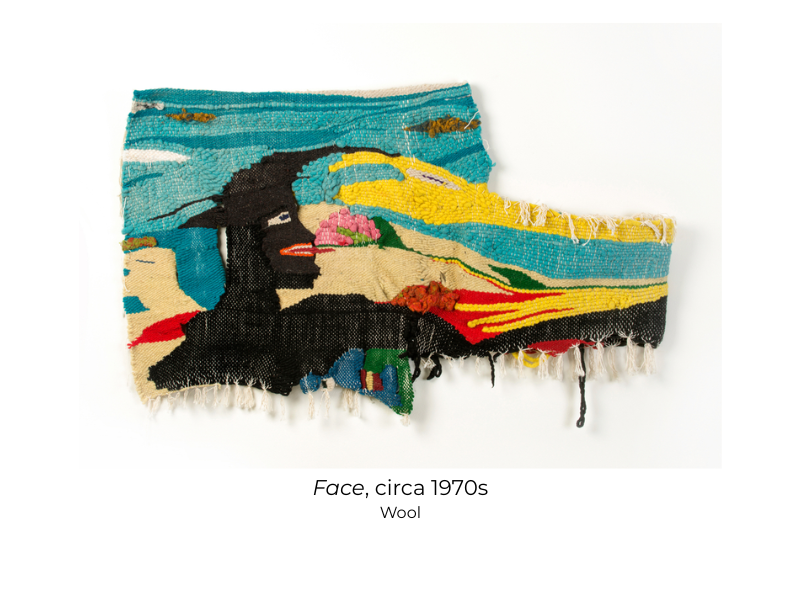 This Black History Month, we recognize the many makers who have passed through City Schools, marked their place in American history, and contributed to their communities. We also look ahead to the next generation of students who will continue that work.
You can view more of Joyce J. Scott’s artwork and her mother, Elizabeth Talford Scott’s artwork online.