
 Research and observed knowledge constantly remind us that a child’s early experiences shape future learning and behavior. Foundational competencies such as critical thinking, communication, adaptability, confidence, and responsible citizenship begin in early childhood.
City Schools’ Portrait of a Graduate unifies these learning aspirations and outlines how the district will provide the resources students need to achieve them. A look into Breona Brandon’s and Michelle Thomas’ pre-K classrooms show that City Schools' youngest scholars are embracing these formative experiences and are thriving.
Welcome to Ms. Brandon’s classroom at Violetville Elementary/Middle School in southwest Baltimore. Four-year-old Braelyn confidently strides to the front of the room to lead her peers in reciting their shared commitments, including saying kind words, keeping their eyes on the speaker, and being kind and respectful. Rian then counts attendance one by one as the other students cheer her on. “You can do it, Rian!” the group excitedly encourages. The class recites the affirmation of the day—”I can do hard things”— before discussing healthy food choices. They count out how many syllables are in each sentence, and Ms. Brandon asks them to identify specific letters in the names of the foods. 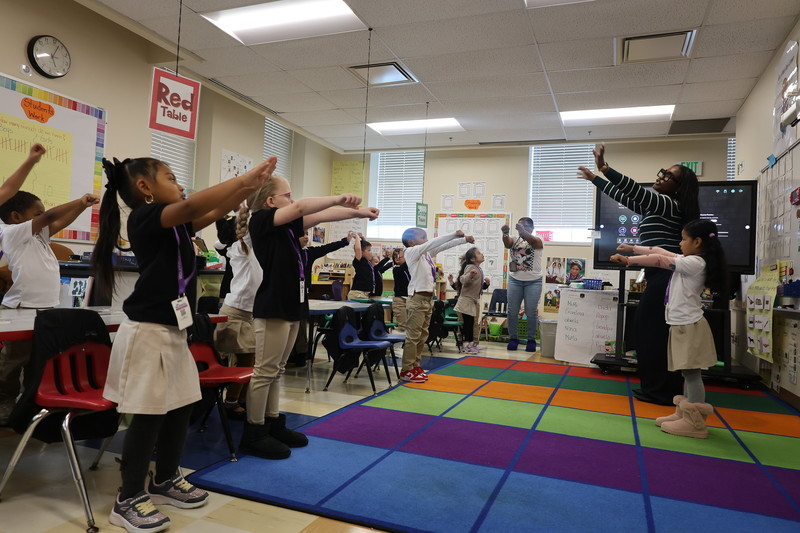
“Learning has to be fun,” says Ms. Brandon. “Our classroom is student-led. They know the expectations I have for them, and they know they’re safe and loved. That gives them the encouragement to solve problems on their own, to show empathy, and to learn.”
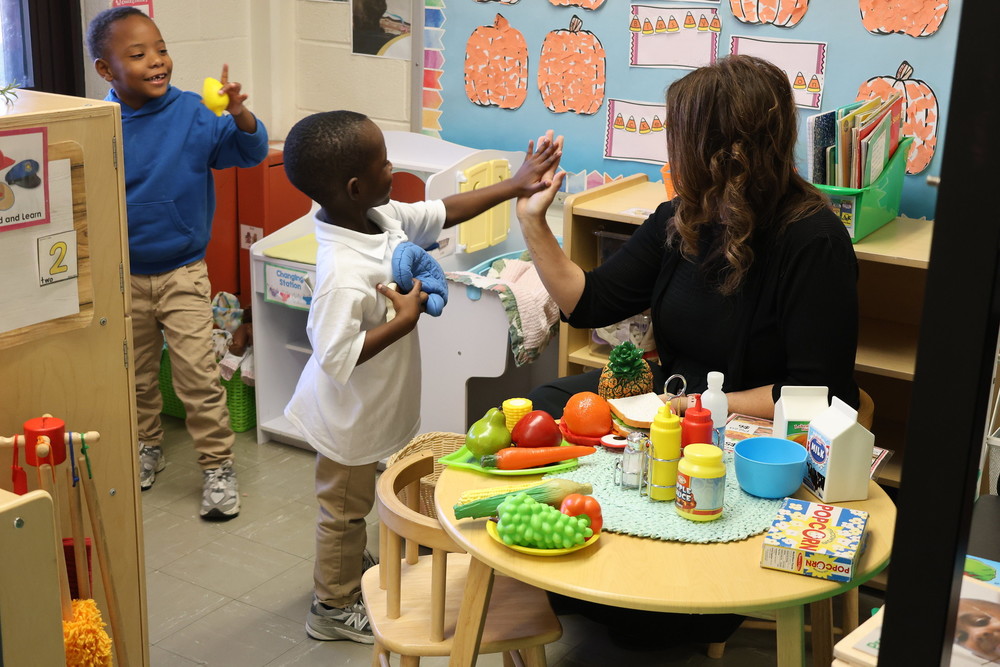
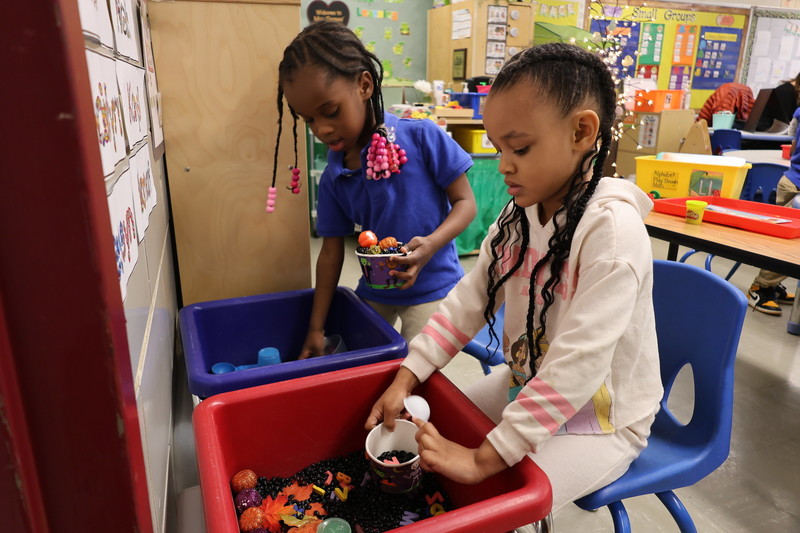
In Michelle Thomas’ pre-k class at Dickey Hill Elementary/Middle School in Windsor Hills, there is a wealth of small-group areas where students can focus their time. The colorful room is filled with engaging activities, including puzzles and games, a plastic kitchen and dolls, markers and stamps, overflowing shelves of books, blocks of all kinds, bins of letters, and seasonal decorations. The alphabet is everywhere—on the carpet and the tables and the walls—as are the students' names, adorning bulletin boards, art projects, bins of crayons, lists of birthdays and class jobs, and drawings of what they each aspire to be.
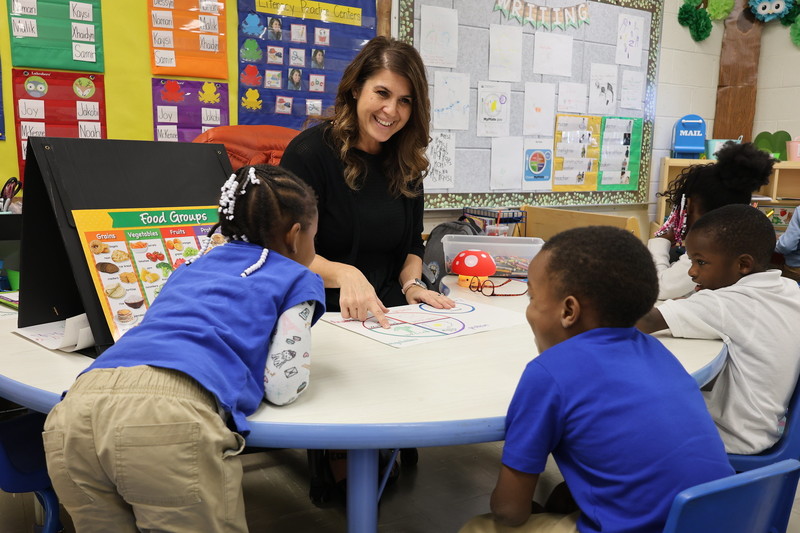 Four students are answering Ms. Thomas’ questions about healthy food. “I’m proud of you,” she repeatedly responds. The other students in the class are engrossed in individual activities, from creating towers with blocks to sorting numbers and working on a number line.
“We're fostering excitement and creating lifelong learners,” says Ms. Thomas. “ A lot of that learning is through kinesthetic play; it encourages the children’s social-emotional development while giving them academic fundamentals.”
The learning is tailored to the interests of each individual student. Namari, for example, likes puzzles. “He’s a deep thinker,” said Ms. Thomas. “He likes being challenged and is proud of himself for thinking through a puzzle.” She makes sure to have plenty of puzzles for Namari to explore. And she taps into his diligence as a model for other students by inviting him to play with his classmates. “They know they're having a good time, but Namari is helping them build their own confidence.”
According to Betsy Decker, an Educational Associate for Early Learning Programs at City Schools, “This approach to early childhood development sets students’ brains up to be better learners. By knowing what to expect and by collaborating and having experiences with each other, children are learning about, and from, real-life situations.”
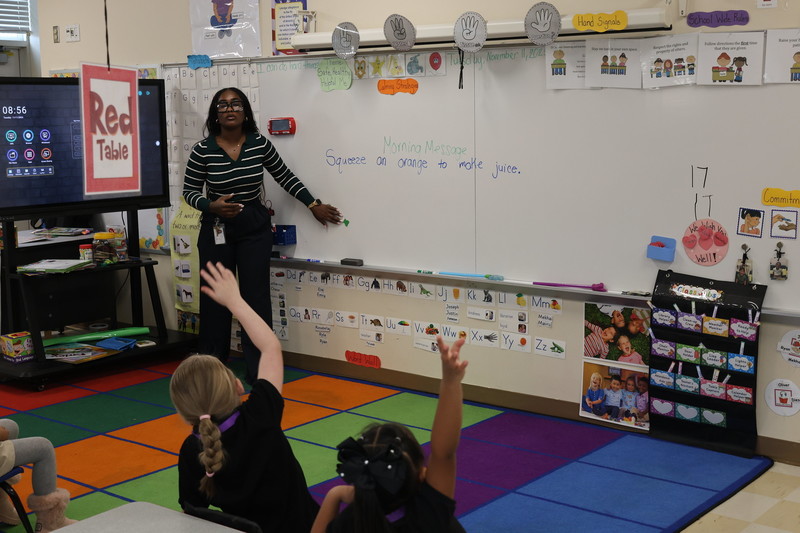
Ms. Brandon and Ms. Thomas have embraced the Frog Street pre-curriculum that City Schools adopted last school year. In addition to guiding core academics aligned with readiness standards, Frog Street supports teachers in developing students’ social-emotional development by encouraging empowering and positive language, student collaborations, and classroom consistency.
The curriculum also incorporates at-home resources and tools, including stories, activity cards, and songs that empower parents and caregivers to become confident partners in their child’s literacy, math, and social-emotional learning journey.
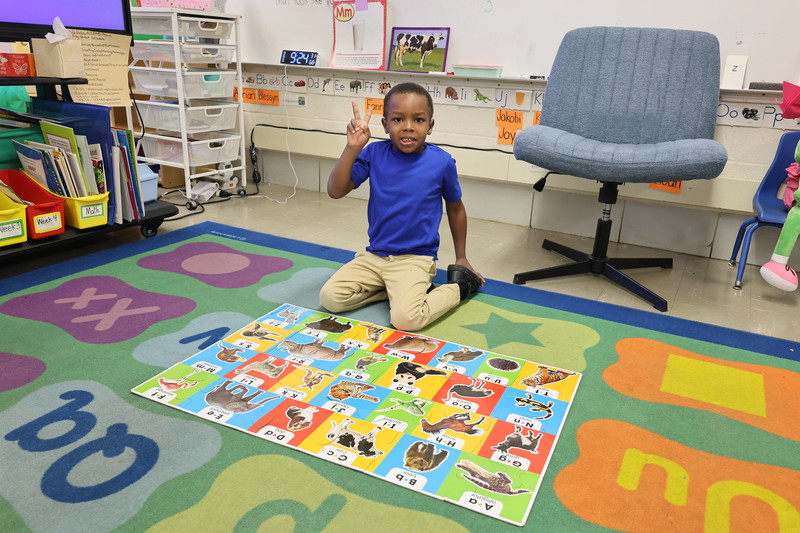 Pre-K students are thriving. Approximately 53.4 percent of City Schools students who attended City Schools' pre-kindergarten programs demonstrated readiness on the state’s Kindergarten Readiness Assessment (KRA) in 2024-25. Between the 2021-22 and 2023-24 school years, City Schools kindergarten readiness improved by 16 percent, four times greater than the state. The kindergarten readiness rate is its highest in nine years. This means more kindergarten students in the school system are more likely to be at grade level at the beginning of their kindergarten year.
Registration for City Schools for pre-K and kindergarten for the 2026-27 school year is open from February 16 to April 17. Families with age-eligible children are encouraged to enroll in “Leap into Learning.” More information on our pre-K programs is available on our Pre-K and Kindergarten registration webpage.