
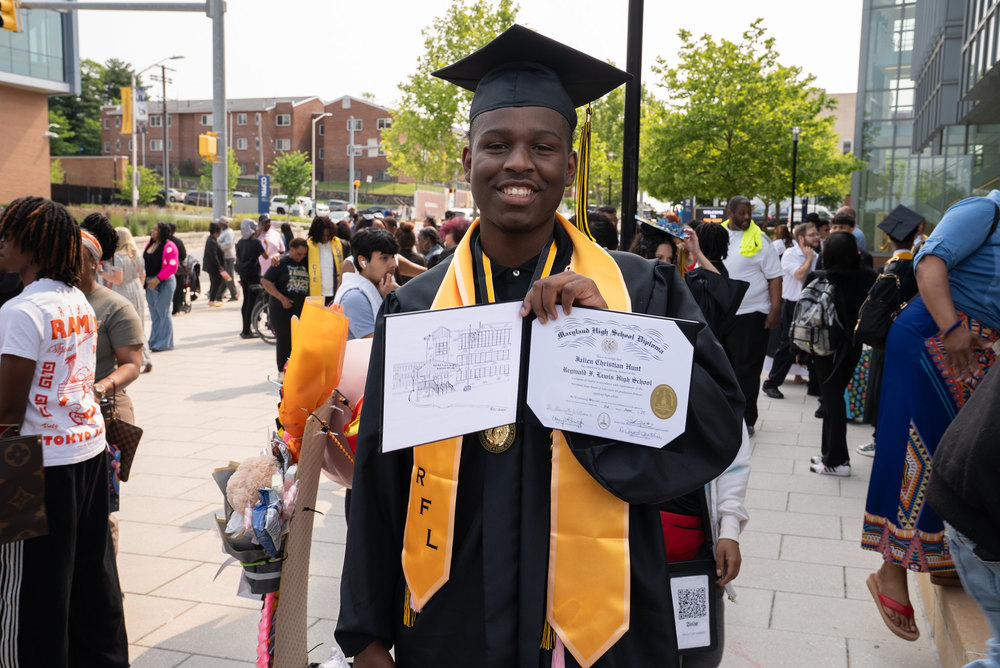
While the state experienced an overall decline in the four-year high school graduation rate, Baltimore City Public Schools (City Schools) demonstrated steady growth and marked its third consecutive four-year graduation rate increase with a total gain of three percentage points since 2022. City Schools increased its 2025 graduation rate by 0.7 points over the last year, which equates to an additional 289 students earning their diplomas. City Schools acknowledges there is more work to do; however, the gains underscore the district’s focused investment in evidence-based strategies that are expanding opportunity, strengthening pathways to college and careers, and ensuring more students cross the stage prepared for college and family-sustaining careers.
“In addition to the 71.7% 4-year graduation rate, we saw the 5-year graduation rate increase to 74.6%. This growth is a powerful testament to the shared commitment reflected in our Portrait of a Graduate work. While we still have much more work to do, this continued progress reflects the dedication of our students, families, school leaders, and educators across every grade level,” said CEO Dr. Sonja Brookins Santelises. “By focusing on 9th-grade support, expanding credit recovery, strengthening post-secondary planning, and prioritizing daily attendance, we are driving student achievement and opening doors to higher education, family-sustaining careers, and brighter futures.”
Four and Five-Year Graduation Rates
The four-year graduation rate for the Class of 2025 increased to 71.7%, the highest since 2018.
The five-year graduation rate improved to 74.6%, the highest since 2019.
Graduate rates among student groups
The graduation rate for students with disabilities increased 5.3 points from 2024 to 2025, at a rate of improvement more than triple that of the state.
The graduation rate for African American students increased 3.2 points from 2024 to 2025, at a rate of improvement more than double that of the state.
Despite large increases in 2024, City Schools’ graduation rate for Hispanic/Latino students and Multilingual Learners both posted decreases in 2025, (5.8 and 6.3 points, respectively); the state experience similar decreases (4.4 and 5.5 points, respectively.)
Academic and school-based post-secondary success support for high school students continues:
Investments in credit recovery, support for 9th grade students, career coaching, and dedicated post-secondary success teams are delivering sustained growth.
On Track to Graduate coordinators are in every high school. High schools monitor and evaluate attendance and performance data to identify students at risk and deliver targeted academic supports for students in grades 9 and 10.
Schools provide post-secondary advisors, mentoring, and career coaching, supported by individualized graduation plans that outline required courses and milestones.
Schools implement core attendance strategies supported by district and community partnerships, including weekly attendance supports, targeted student outreach, and staff training to strengthen graduation outcomes.
Robust CTE and apprenticeship pathways that fuel student interest, along with arts, athletic and extracurricular offerings that provide students a sense of community and belonging.
Continue implementation of strategic scheduling to ensure our Multilingual Learners earn required credits while receiving English language development, alongside increased professional learning for multilingual and general education teachers.